

“What was I doing?”, I ask myself as I stare blankly at my computer monitor. Whatever I was thinking completely slipped my mind. Around me, music is playing, my phone just lit up from another text message, and my coworkers are chatting away with each other. I continue to stare at my computer with a fuzzy feeling in my head as I rack my brain trying to think of the task I was just about to do. “It must have not been that important,” I say to myself and turn my attention to the next thing on my to-do list.
This question is something I ask myself often during my work day. With all of the thoughts swarming around in my head, from what site I have to work on next to what am I going to make for dinner, there’s no doubt I’m going to lose my train of thought at some point. It’s honestly frustrating. Why can’t I keep my thoughts straight and why can’t I focus on one thing at a time? I thought I had a problem. I would look around the office and see so many of my coworkers with their headphones on and dialed in to their work while I’m struggling to even think about what I was thinking about.
It turns out it’s not just me who thinks they have a problem focusing. It’s an epidemic that has been plaguing our nation for the last 50 years. Johann Hari, author of Stolen Focus: Why You Can’t Pay Attention – and How to Think Deeply Again, states in the book’s introduction that the average American who works in an office only focuses on a single task for an average of three minutes. Only three whole minutes? How can I possibly accomplish anything I have to do when I can focus for only three minutes? What’s worse is that it takes an average of twenty-three minutes to get back on track after being interrupted.
So, what’s the issue we’re facing? Is it our environment or is it our brain? If you ask me, I would say that our environments are effecting our brains. Professor Earl Miller of neuroscience at the Massachusetts Institute of Technology says that our brains can only produce one to two thoughts at once. Our brains are very single-minded which is why they thrive at mono-tasking. However, in our world of constant multitasking like answering a call while sending an email or checking Instagram while you’re watching TV, our brains are switching too much. Professor Miller states that as a result of constant switching, your performance drops and you become slower because of the time it takes for your brain to move from one task to another.
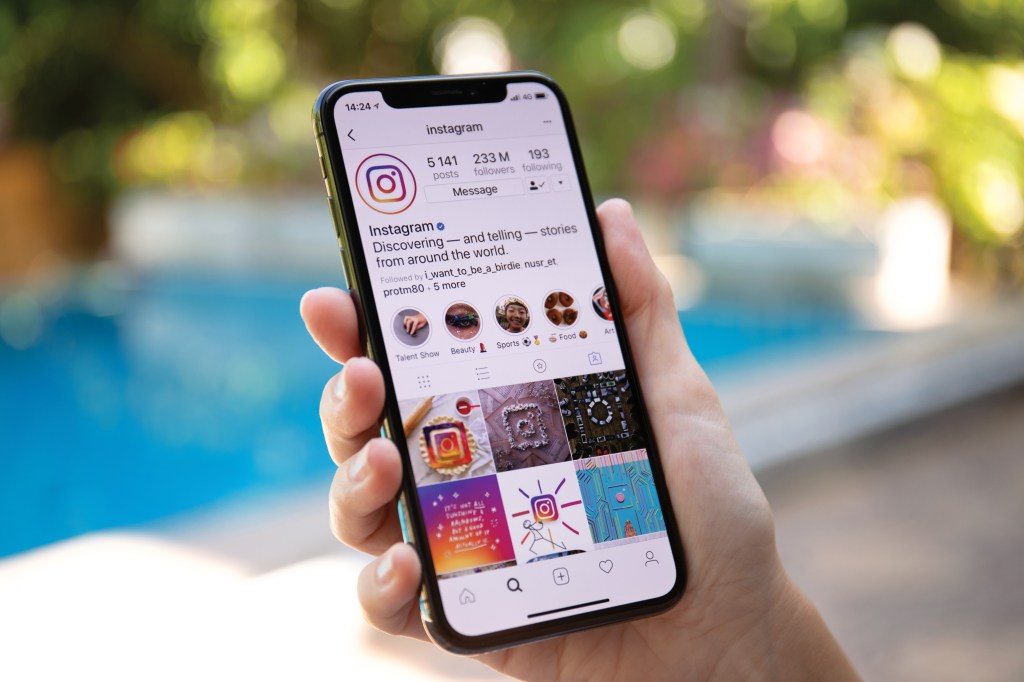
Alright, this is great to know, but what can I do to fix my focus? Johann Hari inspired me to take a deeper look at what is distracting me. The most obvious answer is my phone. Having the world at my fingertips is a double edged sword. While it’s great to be able to answer any question or learn anything I want, it’s also a huge distraction. Can’t think of a layout for the next section on this site? Let’s go on Instagram. Bored at work? Let’s check Facebook. It never makes me feel any better than before, but sometimes I just can’t help the pull to pick up my phone. It’s like a security blanket, always knowing that it will be there. It’s not just me who feels like that. Artist and professor Ben Grosser feels the same. His project Stuck in the Scroll is very simple, is Ben scrolling on TikTok right now? Grosser is publicly sharing this information to hold himself accountable. While I admire Grosser’s actions, I’m not going to go that far to limit my screen time. Instead, I’ve downloaded an app that blocks Instagram (my biggest screen time culprit) to five sessions of five minutes between the hours of 9:00 am to 5:00 pm Monday through Friday. Basically, the hours that I’m at work. This is the first step of many to help me regain my focus.
The app is really helping. I’m averaging only two to three Instagram sessions (ten to fifteen minutes) during my work hours. I still find that I can struggle with feeling a lack of focus when I need to be working on something. So, I put my focus to the test. I took The New York Times Attention Experiment and was able to stay in for the entire ten minute challenge but found that around six minutes was when I started to get antsy. I was done and ready to move on to something else. Six minutes is higher than the average three that Johann Hari stated in his book, but it’s still not a lot of time.
So, what can I do? Limiting distractions is the first and obvious answer. I can do this by putting my phone away where I can’t see it, closing unnecessary tabs on my computer when I don’t need then, and even going as far as telling those sitting next to me that it’s time for me to focus. Restructuring my work flow to allow for more periods of deep work is going to be important. Distractions are inevitable in the workplace and I think it’s important to recognize and be okay with that. Getting my focus back is going to take some time and serious effort, but it’s not something that can’t be achieved. I will surely still have moments where I ask myself, “What was I doing?”, but knowing that this is more common than I thought helps me to know it’s not just me.





 Pixel + Parchment
Leave a comment