
I think we can all agree that our society is addicted to technology. You would have to live on a deserted island to not have any form of technology within an arms reach. It seems great (from the perspective of the person living on the deserted island). We have all the information in the world right at our fingertips. It’s not all it’s cracked up to be. It’s not all funny cat memes and posting selfies online. There are real, harmful effects that our technology, specifically social media, is having on us as a society. We are facing extreme overuse, invasion on our privacy, and extremely low rates of mental health.
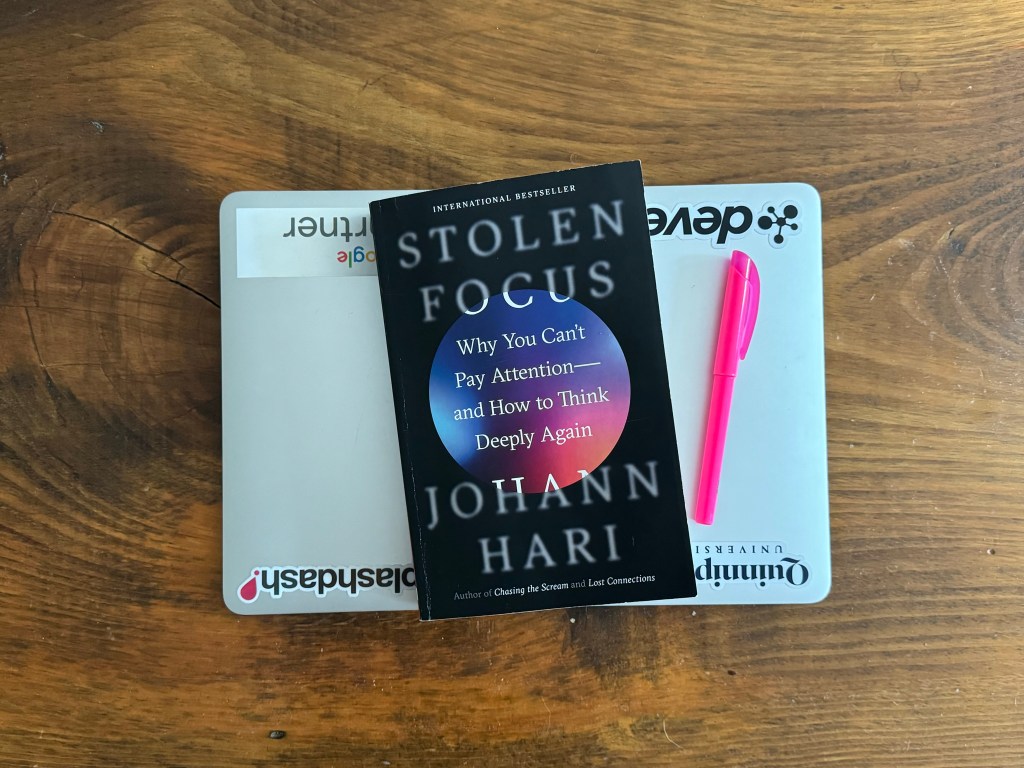
According to Johann Hari, author of the book Stolen Focus, he believes there are three options; we keep our technology usage as it is and continue on this downward spiral, we become aware of our usage habits and change them ourselves, or we come together as a people and demand for the social media companies to change their practices. We can’t continue down this technology use path as it is or we will soon face dire consequences. We have to make a choice; change our habits or make them change theirs.
Changing Our Habits – One Notification at a Time
The Pew Research Center did a survey and 90% of adults in the United States own a smartphone. And these smartphones are pretty smart. They are equipped with every feature you can possible imagine. Including features to silence the phone when needed. Nir Eyal, author and tech designer from Silicon Valley, says that these features need to be used more often. Most people don’t even change their notification settings beyond the default. That means that they are constantly bombarded by different pings and dings in their pockets. If we took the time to silence the notifications we don’t want or even turn on “do not disturb” when it’s time to focus, we would gain autonomy over our daily tech consumption. We will increase our mental awareness when we don’t constantly have our noses in our phones. Changing the way we use our phones and increasing our mindfulness is key to regaining our focus and ability to do deep thinking.
Taking a Stand Against Big Tech
We can change a lot about ourselves if we change our technology use habits, but that’s not taking care of the bigger issue. No matter how we change how we use our devices, the big tech companies are still going to be feeding us constant stimulation and notifications unless we demand them to change. Johann Hari shared an interview he did with Tristian Harris and Aza Raskin where they share their two solutions to change big tech. They say that one solution is for social media platforms to become a subscription based service rather than relying on advertisers as their main revenue. Users would only have to pay between fifty cents and a dollar monthly to continue to use their Facebook, Twitter, or Instagram accounts. Harris and Raskin also suggest another solution where social media platforms are taken into public ownership, like the BBC is run. The BBC is owned and funded by the British public, so it’s run in the people’s interest. Both of these solutions would align the mission of the social media companies with the true intentions of the people using the platforms. Our daily lives would no longer be invaded by constant notifications and ads for things we don’t need.
So What Should We Do?
It’s very obvious that we have a problem that needs to be solved. It’s just a matter of how we decide to solve it. Do we try to fix ourselves first or do we fix the big tech companies? Personally, I think it needs to be a combination of both solutions. Individuals should be aware of their tech usage and work to limit themselves through the features that our devices already have implemented. There’s nothing wrong with utilizing “do not disturb” or turning off notifications when we don’t really need them. I also think, though, that if us as the users are working to change how we use technology and social media, then the tech companies need to work on changing what they are giving to their users. It can’t be a one sided effort. We can silence our phones all we want, but not much will change if Facebook, Twitter, and Instagram are still sending us notifications every five seconds. Users of these platforms should demand platforms that serve their intentions instead of those of the paying advertisers. It’s with these actions that we will be one step closer to solving this digital dilemma.







 Pixel + Parchment
Leave a comment