
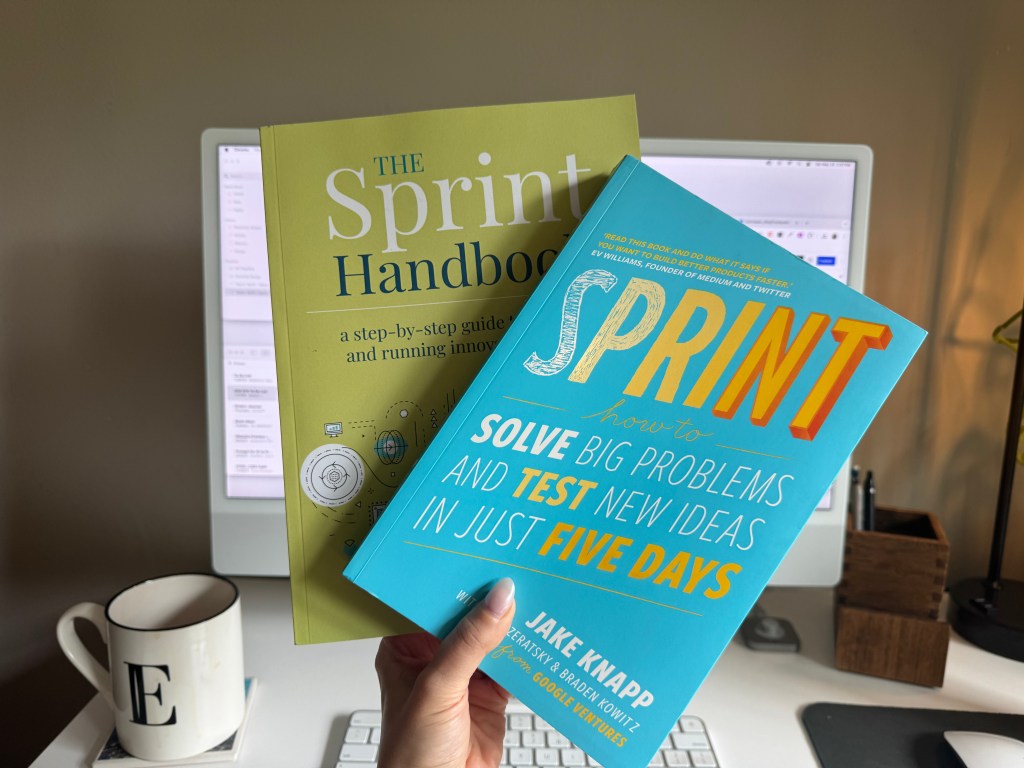
In the fast paced world of digital product development, time is of the essence and it always seems like there’s not enough. Enter the Design Sprint, a five day process started in the 2010s by Jake Knapp at Google Ventures (GV). Design sprints were created to rapidly solve complex problems through design, prototyping, and user testing. It quickly became a well known process among start-ups and large companies alike, allowing them to test ideas quickly and efficiently.
What is a Google Design Sprint?
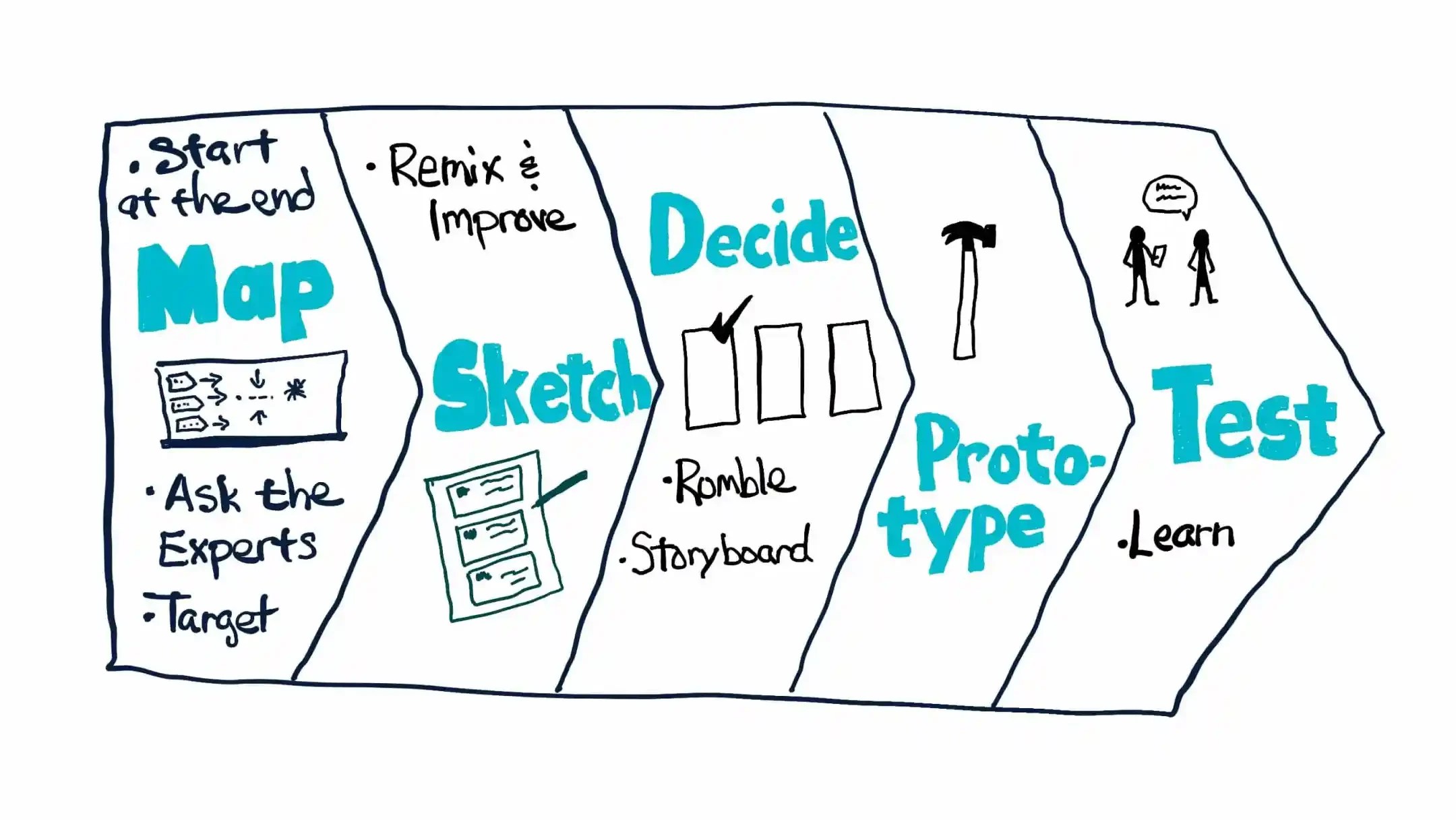
A design sprint is a structured, time constrained process that brings together members of different teams to tackle critical challenges. Sprints are usually five days where the team moves from understanding the problem to testing a potential solution on real users or customers. Sprints can be used by many different types of companies, large or small, if they have a problem they are facing and would like to solve it fast. In his book, Sprint: How to Solve Big Problems and Test New Ideas in Just Five Days, Knapp explains that there are five steps to a design sprint with each one corresponding to one day.
Knapp’s five steps to a successful design sprint are:
- Day 1 (Monday): Map out the problem and pick an important focus
- Day 2 (Tuesday): Sketch out the competing solutions on paper
- Day 3 (Wednesday): Pick one solution and turn it into a testable hypothesis
- Day 4 (Thursday): Develop a medium or high fidelity prototype
- Day 5 (Friday): Test your prototype with real people
This process gives each step an equal amount of time and allows the team to quickly have something that users can react to without going through an entire product development.

Why Are Design Sprints Important in UI/UX?
Adam Fard, Co-Founder and Head of Design at Adam Fard UX Studio states that, “UX design sprints encourage team members to understand users’ needs, ideate, and reach a testable prototype under a time crunch. It’s a streamlined approach that eliminates distractions and aligns teams with a clear goal.” UX/UI design sprints have many benefits to UX/UI designers and development teams, some of which include:
- Rapid Validation: Sprints enable teams to come up with and test new ideas quickly without investing too much time and resources.
- Enhanced Collaboration: By bringing together a diverse team with a wide set of skills, sprints help to induce a collaborative environment with different perspectives.
- User Centered Focus: Since the final stage includes a real user test, sprints ensure that it’s known whether or not the product meets users needs.
- Improved Decision Making: The time constraint of a sprint helps the team to make quick, informed decisions that set a clear path forward.
Key Team Roles in a Design Sprint
Design sprints are meant to be a collaborative process with clearly defined roles for each team member. Pattie Belle Hastings, design professor at Quinnipiac University and author of The Sprint Handbook: A Step-By-Step Guide to Planning and Running Innovation Sprints, says that the team of a successful sprint must include:
- Facilitator: The facilitator guides the team through each phase and ensures that each task stays on track. They often have experience with sprint methodology and group dynamics.
- Product Owner/Project Leader: This role is usually someone who has a deep understanding of the problem and desired outcome. They provide the team with direction and make critical decisions.
- Designer: The designer brings visual and UX expertise and is the person to sketch and create prototypes that are usable.
- Engineer: The engineer is not always required, but when they are, they offer technical insights, identify constraints, and help to create realistic solutions.
- User Researcher: The researcher helps to prepare for the user test, interprets feedback, and ensures that the team’s decisions think of the user.
- Marketer: The marketer looks at current market trends and customer preferences so that decisions are made to align with existing marketing strategies.
- Subject Matter Expert: This role is not always required, but when it is, they bring their expertise to help guide discussions and decision making.
The ideal size of a design sprint is typically 5-8 people, however depending on the problem at hand and the size of the company, there can be multiple people for one role or one person handling multiple roles.
Design Smarter, Not Harder
When it comes to UI/UX design, user satisfaction and quick innovation is essential and design sprints are proven to achieve both. With an environment of collaboration, design sprints have become a extremely useful tool for designers and product teams to focus on user needs, validate ideas, and deliver impactful solutions.






 Pixel + Parchment
Leave a comment