
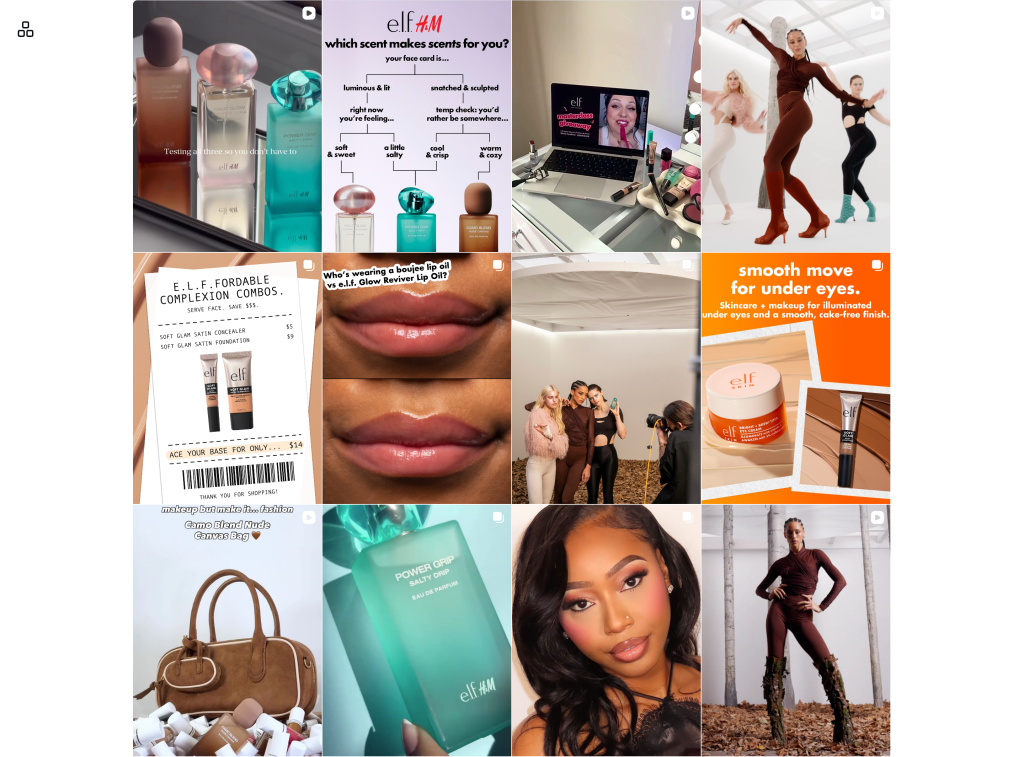
Organic social media success is usually measured by visible engagement such as likes, comments, and shares. However a deeper analysis shows that not all engagement contributes equally to all business outcomes. I recently looked into e.l.f. Cosmetics‘ organic Instagram performance and found that they have achieved strong brand awareness and positive audience perception, but are still leaving their community relatively untapped. e.l.f.’s strategy highlights the difference between attention and participation and why the latter matters more for long term brand value.
Strong Awareness and Consistent Performance
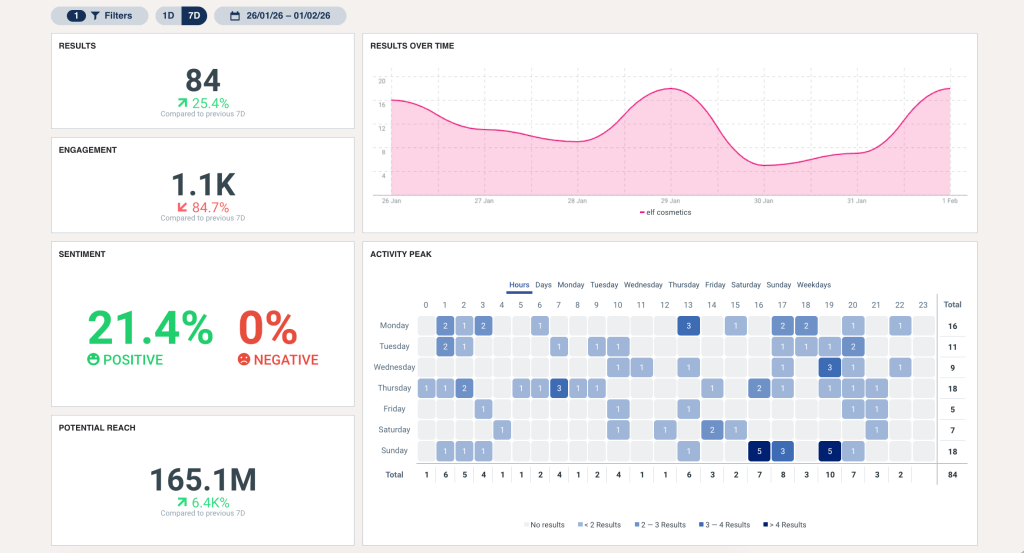
From a performance stand point, e.l.f. demonstrates many social media best practices. They post consistently, at least one post is made a day, so they maintain a high and steady reach. Average posts generate approximately 1,500+ likes, 200+ comments, and over 100 shares. Collaboration posts with other brands outperform e.l.f.’s own organic content by reaching anywhere from 5,000 to 200,000 likes and 500+ comments. These metrics signal that there is high brand awareness and visibility.
Social listening data continues to reinforce this observation. During the analyzed period, brand mentions increased almost 15% week over week while potential reach exceeded 124 million. According to Olivier Blanchard‘s Social Media ROI, this aligned with the early stages of value creation, where social activity builds awareness that can later be turned into sales and brand advocacy. It’s obvious that e.l.f. is succeeding at the top of the funnel.
Positive Sentiment, Limited Depth
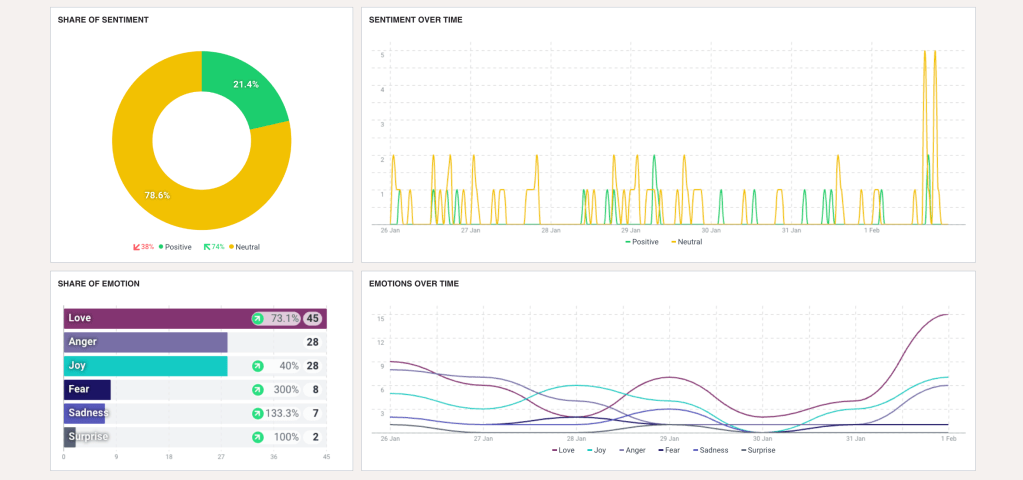
Sentiment and emotion analysis further strengthen the picture being painted. Over 22% of mentions were explicitly positive and no negative sentiment was detected. The most dominant emotions associated with the brand were “love” (50%) and “joy” (20%). Negative emotions appeared only in low volume and issue specific contexts. When looking at the comments on posts, they shared similar insights. Users frequently leave heart eye emojis and short praise for the brand like “Love this” or “Need it”.
However, nearly 78% of sentiment was signaled as neutral which indicates acknowledgment versus meaningful interaction. Comments are frequent and continue days after posting, but they rarely develop into conversations between users. Blanchard notes in chapter 3 of his book that counting likes and comments without evaluating the quality of them risks overestimating their impact. The data suggests the e.l.f. is getting attention, but not converting that attention into community.
Why Attention Alone Is Not Enough
Faris Yakob‘s Paid Attention shows us how to interpret this gap. In chapter 3, he argues that advertising works through emotion and meaning and not just repetition alone. e.l.f. has a strong emotional reputation because their audience feel positively towards the brand, but those emotions aren’t being used in participatory behavior. In chapter 4, Yakob shares how interruptive advertising invite audiences to take part. An example of of this is Red Bull’s Art of the Can campaign which transformed consumers into collaborators.
e.l.f.’s Instagram strategy remains largely transactional. The most common calls to action are “Shop Now”, “Comment Below”, and “Tag elfcosmetics”, with “Shop Now” being the most popular. This is effective when converting users to buy their products, but not as effective at making users contributors. This leads to engagement spiking when a new product launches, but fades quickly without turning into sustained discussion.
A Shift Towards Community-Led Content
To align organic social activity more closely to their long term business goals e.l.f.’s strategy has to move from product led promotion to community led participation. Sharon Lee Thony‘s The Marketing Campaign Playbook emphasizes that effective content strategies have to be built around an audience’s interests rather than brand messages only. Introducing recurring and recognizable content like weekly Q&As, opinion based prompts, or audience submitted routines would give followers a reason to engage repeatedly.
Replacing some transactional CTAs with open ended questions can also lead more deep engagement. Prompting users to explain why they love a product or how they use it invites them to tell stories. Yakob identifies this as a key driver to emotional resonance. More importantly, e.l.f.’s strong positive sentiment makes this a low risk shift. The brand already has trust and goodwill from their audience.
Measuring What Matters
This evolution requires moving beyond looking at only surface metrics. Similar to Blanchard’s framework, success should be tracked using indicators like comment length, repeat commenters, and engagement longevity. These metrics better reflect whether social activity is contributing to customer loyalty and not just quick, momentary visibility.
Conclusion
e.l.f. Cosmetic’s organic Instagram strategy is effective at generating awareness and positive sentiment towards the brand, but it shows opportunity to gain more participation rather than passive praise. By aligning content strategy with audience psychology and performance measurement frameworks, e.l.f. can transform attention into community. This would turn their strong brand presence into a sustainable competitive advantage.





 Pixel + Parchment
Leave a comment