
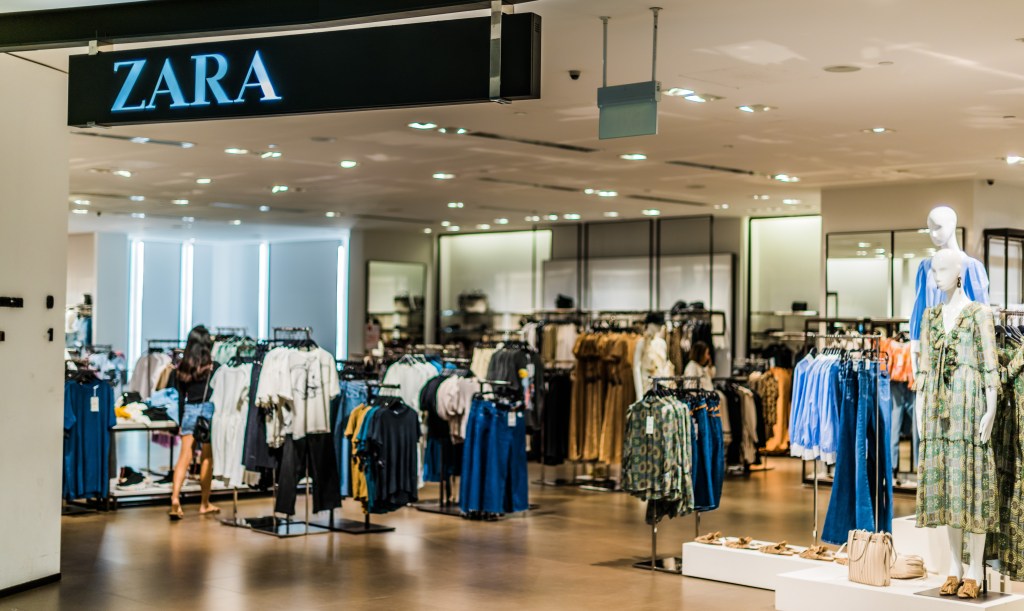
Zara, a flagship fashion brand founded by Inditex in 1975 in A Coruña, Spain, has built a reputation as a trend forward store that keeps shoppers coming back to see what’s new. Fashion discovery is now happening more through short form video and user generated content (UGC). Influencer marketing is a natural fit for Zara’s audience, which tends to be the younger, digital savvy shoppers who use TikTok and Instagram for outfit inspiration. This post outlines an influencer first marketing strategy for a hypothetical seasonal Zara drop called “Zara City Capsule”. The goal is to general measurable results through awareness and engagement as well as trackable sales.
Campaign Concept: “3 Looks, 1 Capsule”
The Zara City Capsule campaign is built around the idea that each creator builds three different looks around one capsule of clothing in order to prove versatility in the items. Each influencer produces:
- Everyday city look (errands/campus/coffee run)
- Office to dinner look (smart casual)
- Night out look (statement styling)
This structure gives the audience clear reasons to save and share the post while also making performance easier to compare between creators because the format is consistent.
Influencer Selection
For influencer discovery and collaboration, I used Collabstr to source the influencers. The two creators that I selected align with Zara’s target audience; fashion forward, primarily women, and heavily Gen Z/Millennial.
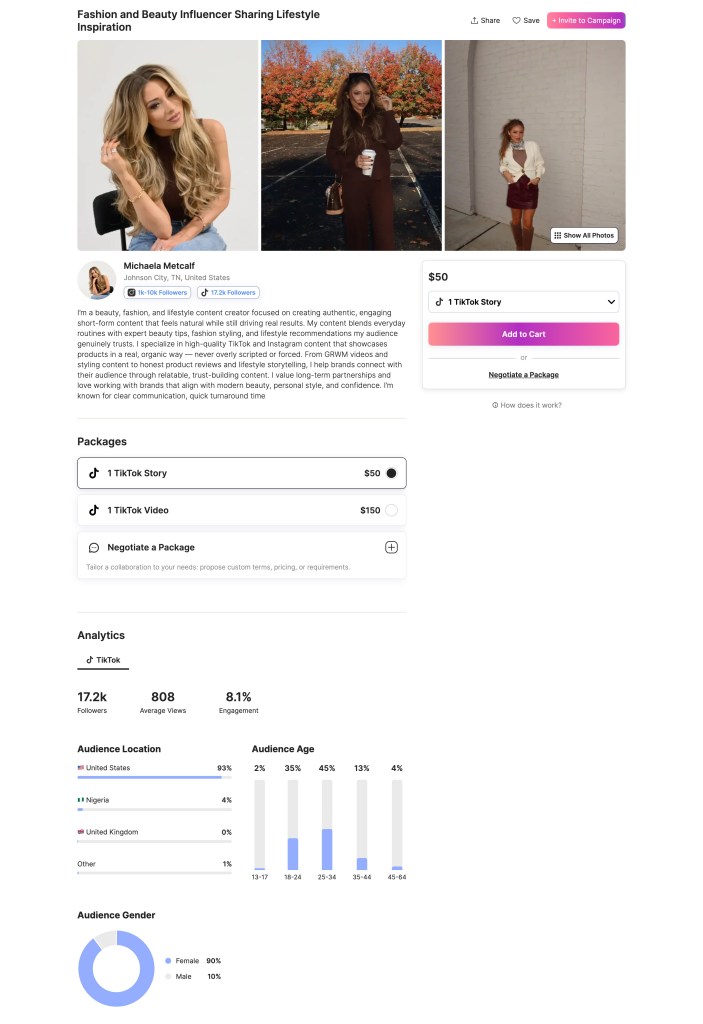
Influencer 1: Michaela Metcalf (TikTok)
Michaela fits Zara’s brand because she is a micro-influencer with a strong engagement rate. She is well positioned to drive high quality interaction (comments, shares, and saves) through try-on and styling content. Based on her Collabstr profile she has:
- ~17.2K TikTok followers
- ~8.1% engagement rate
- A mostly female audience based primarily in the US
- Strong concentration in the 18-34 age range
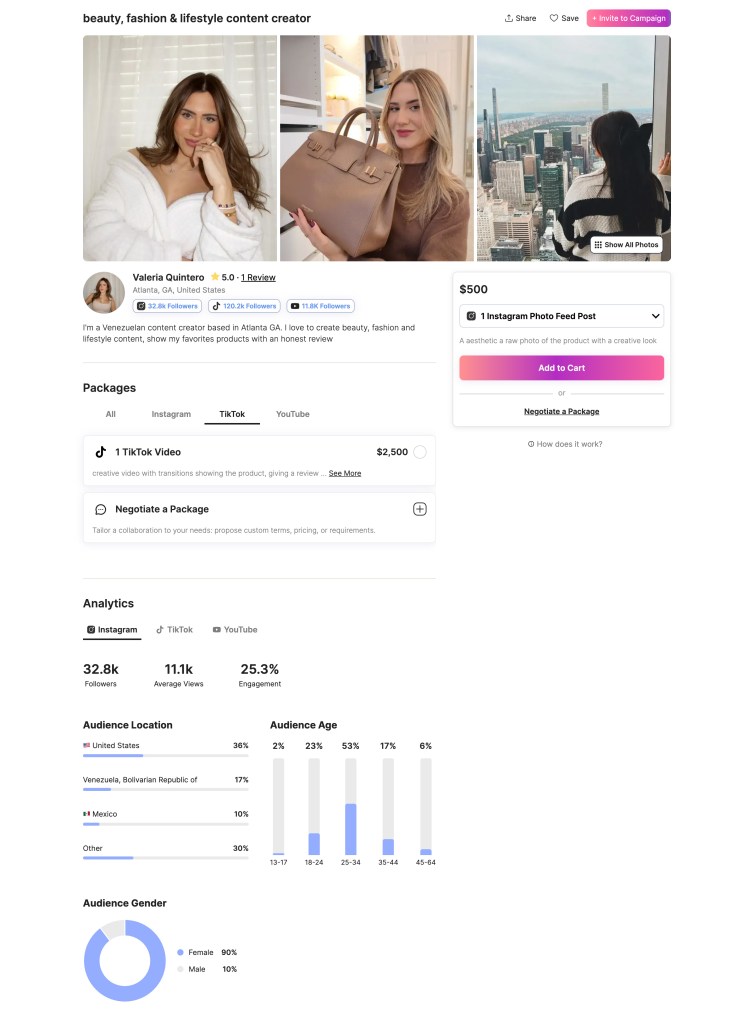
Influencer 2: Valeria Quintero (Instagram & TikTok)
Valeria boasts an extremely high engagement rate that suggests a highly responsive audience. She’s ideal for Instagram based fashion storytelling through image carousels, Stories with links, and outfit “formulas” that promote saves and traffic. Based on her Collabstr profile she has:
- ~32.8K Instagram followers
- ~25.3% engagement rate
- Primarily female audience based in the US with some international reach
Campaign Goals and Deliverables
This campaign has three clear goals to achieve:
- Brand Awareness: Increase reach and qualified views from women 18-34 in the US
- Engagement: Drive high intent actions like saves, shares, and comments
- Conversions: Generate trackable clicks and purchases using UTM links and promo codes
In order to achieve these goals, the campaign will requires Michaela and Valeria to post multiple pieces of sponsored content over a span of 2-3 weeks. Michaela will lead with TikTok, posting 2 videos and 1 Story CTA. Valeria will post 1 Instagram carousel post alone with 3-5 stories with links, a poll, and a reminder CTA.
Performance Measurement: KPIs & Tools
Success of this campaign will be measured through both platform analytics and website analytics.
Awareness KPIs
- Instagram reach and impressions
- TikTok video views and completion signals
Engagement KPIs
- Engagement rate
- Saves and shares – signals strong future purchase intent
- Comments and profile views
Conversion KPIs
- Link clicks and CTR especially on Instagram Stories
- Website sessions tracked with UTM parameters
- Purchases and revenue tracked by creator specific promo codes
Tools Used
- Instagram Insights to track reach, saves, shares, Story link taps, and follower changes
- TikTok analytics to track views, watch time, completion rate, shares, and profile visits
- Google Analytics to analyze UTM traffic and conversions
By using multiple attribution methods, this helps to reduce common influencer measurement issues like delayed buying behavior and cross device purchasing.
Challenges in Measuring Influencer Success
Challenge 1: People see it today but buy later
Solution: Use both UTMs and promo codes so it’s easy to track where the purchase came from.
Challenge 2: Views can be inflated without real buying intent
Solution: Prioritize high intent metrics (saves, shares, completion rate) over vanity views alone.
Challenge 3: Mixed geography especially for global audiences
Solution: Segment reporting by location when possible (US only traffic and code eligibility) to match campaign objectives.
Conclusion
The Zara City Capsule influencer strategy combines two complementary creator strengths; Michaela Metcalf’s TikTok try-ons and Valeria Quintero’s highly engaging Instagram fashion inspiration. Most importantly, this campaign is designed for measurable outcomes. Every deliverable is tied to a goal, each creator gets unique tracking, and the reporting focuses on metrics that indicate real consumer intent.

 Pixel + Parchment
Leave a comment